
Private Equity Is Buying Up Pilates Studios. Here's How Independents Compete.
08/19/2026 / by fitli
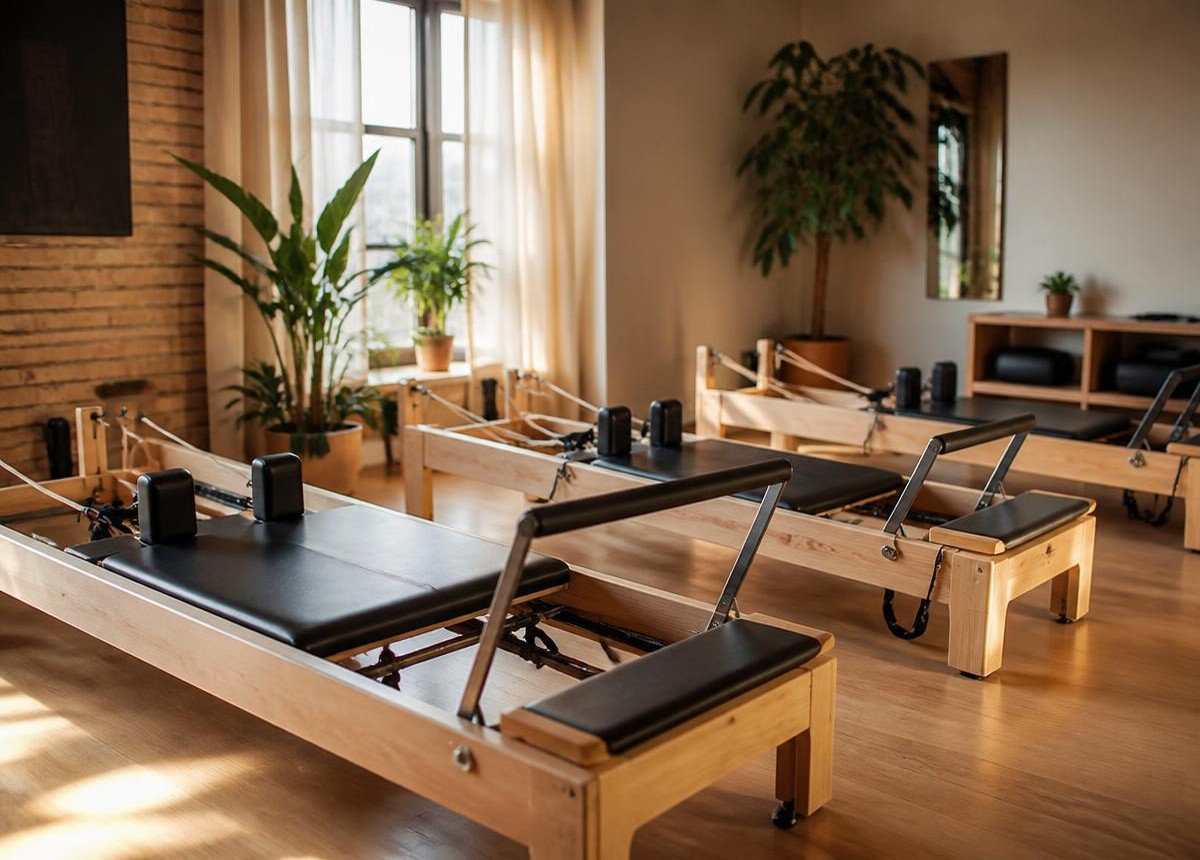
If you own a Pilates studio, you’ve probably noticed a new kind of competitor showing up in your market — not another boutique with a founder’s name on the door, but a studio that looks suspiciously like a dozen others three states over. That’s not a coincidence. Institutional capital has decided Pilates is worth owning, and it’s moving in more than one form: private equity buying operating companies outright, PE-backed franchisees rolling up territory, and lenders financing rapid expansion. None of this makes independent studios obsolete, but it does change what “competitive” means. The studios that will do best from here are the ones that understand exactly what each kind of capital buys — and what it doesn’t.
The consolidation wave, by the numbers
The clearest example of direct private-equity ownership in the category: in September 2024, L Catterton — the consumer-focused PE firm backed by LVMH — acquired a majority stake in solidcore, the reformer-based strength-training chain, in a deal Reuters reported valuing the company between $600 million and $700 million. Solidcore describes itself as a Pilates-inspired strength-training concept rather than traditional Pilates, but the deal is a direct signal of how investors are pricing the category.
On the franchise side, Aligned Fitness Holdings — a Club Pilates franchisee backed by the private equity firm Eagle Merchant Partners — grew to 61 studios after acquiring six New Jersey Club Pilates locations in June 2026. That’s real PE ownership, but one step removed from the Club Pilates brand itself: Eagle Merchant owns Aligned, and Aligned owns the studios operating under Xponential Fitness’s Club Pilates franchise system.
Riser Fitness, another large Club Pilates franchisee, is a different case worth distinguishing clearly: in October 2024 it secured a $72 million structured financing commitment from funds managed by Fortress Investment Group. That’s debt-style growth capital to fund new construction and acquisitions — not a private equity ownership stake. Institutional lenders backing rapid expansion is a related but distinct trend from PE buying equity.
And Xponential Fitness itself — the publicly traded franchisor behind Club Pilates — presents a more complicated picture than “scaled operator winning.” North America same-store sales fell 4% in Q4 2025 and 6% in Q1 2026 company-wide; Club Pilates specifically was down 3% in Q4 despite finishing the full year up 3%. Scale hasn’t insulated the brand from a slowing comp environment.
Put together: real PE ownership exists in this category, but it takes different forms — direct acquisition (Solidcore), franchisee roll-ups backed by PE firms (Aligned), and institutional debt financing that isn’t ownership at all (Riser). Worth keeping those distinctions straight, because they carry different implications for how these platforms will behave.
Why investors are interested in Pilates specifically
It’s worth understanding the rationale, in the investors’ own terms. Jake Rubenstein, a vice president at Eagle Merchant Partners, told Franchise Times that Pilates ranked high on the firm’s list because it’s a “regenerative” modality rather than a “degenerative” one — the framing investors use for formats they believe keep members active and enrolled over the long term, in contrast to higher-injury-risk training styles. That’s an investment thesis, not a clinical claim, but it explains the appeal: a format investors believe has durable member retention.
Reformer-based training is central to that thesis — it’s the format both Solidcore and Club Pilates are built around, and it’s consistent with premiumization trends across boutique fitness generally. Investors and operators in this space have also pointed to a broadening client base, including more men and older adults seeking low-impact training, as part of the growth story — though that’s best understood as investor rationale and anecdotal industry commentary rather than a rigorously measured trend.
What scale actually buys — and what it doesn’t
To compete intelligently, it helps to be honest about where a well-capitalized platform genuinely has an edge.
Scale buys marketing efficiency — the ability to run paid acquisition across many markets and refine what converts faster than a single studio can. It buys instructor training pipelines, so a new location isn’t hunting for its first few certified teachers from scratch. It buys standardized systems and negotiating leverage on equipment and real estate.
What it’s harder to buy — not impossible, but harder to preserve consistently at scale — is the thing that keeps a Pilates client on the schedule for years: a relationship with a specific instructor who knows their body, their history, and what they need that week. Franchise economics tend to standardize instruction to protect consistency across locations, which is a reasonable trade for the franchisor but can come at the expense of the texture that makes a boutique studio feel irreplaceable to longtime clients.
Deep specialization is similarly hard to standardize at scale. A platform optimizing for dozens of locations is less likely to build out specialized post-rehabilitation programming and referral relationships with local physical therapists, or a niche prenatal community, the way a single studio can when it goes deliberately narrow.
And scale is no guarantee of financial performance — Xponential’s recent same-store sales softness is a reminder that a large franchise system isn’t automatically outperforming smaller operators.
Where independents still win
None of this means independents are at a structural disadvantage — it means the advantage has to be deliberate rather than assumed. Three areas stand out:
- Instructor continuity. If your studio’s retention is built around specific teacher-client relationships, that’s an advantage a franchise system has more trouble replicating without loosening the standardization its model depends on. Protect it: pay competitively, give instructors real input into programming, and make staying worth it.
- Clinical and community depth. A studio genuinely known in its market for something specific — referral relationships for post-rehab clients, a strong prenatal community, deep ties to a particular neighborhood — has a positioning story a regional platform can’t easily copy. Depth beats breadth in a local market.
- Format flexibility. Independents can experiment with hybrid formats, pricing structures, or class types faster than a franchise system that needs consistency across locations. That flexibility only pays off if it’s actually used.
The operational gap independents need to close
Here’s the uncomfortable part: the areas where well-capitalized platforms tend to out-execute independents aren’t glamorous, and they’re exactly what most studios underinvest in — properly managing limited reformer capacity, reducing preventable no-shows, and making the booking and payment experience frictionless enough that it’s not costing you members on the margin.
An independent studio doesn’t need PE-level capital to get this right. Capacity-based scheduling, online booking, automated reminders, waitlist and cancellation management, integrated payments, and clean attendance and client records go a long way toward closing that gap — without requiring the standardization that costs a franchise its relationship advantage. That’s the real competitive answer to consolidation: not out-marketing a platform with institutional backing, but making sure the operational side of the business is tight enough that the relationship side — where independents already have the edge — gets to shine.
FAQ
Is Club Pilates owned by private equity?
Club Pilates is a franchise brand owned by Xponential Fitness, a publicly traded company. Individual Club Pilates franchisees, however, are increasingly owned or financed by private equity and institutional capital — Aligned Fitness Holdings (backed by Eagle Merchant Partners) and Riser Fitness (financed by Fortress Investment Group) are two of the largest examples.
Is Solidcore private equity–owned?
Yes. L Catterton, a private equity firm backed by LVMH, acquired a majority stake in Solidcore in 2024 in a deal reported at $600–700 million. Solidcore describes itself as Pilates-inspired strength training rather than traditional Pilates.
Can independent Pilates studios compete with investor-backed chains?
Yes, but the edge has to be intentional. Independents tend to have an advantage in instructor continuity, local specialization, and community depth — areas that are harder to standardize at scale. Pairing that with tight scheduling and operational systems closes most of the remaining gap.
Why are investors interested in Pilates right now?
Investors point to reformer-based training’s premium positioning and a belief that Pilates keeps members enrolled longer than higher-injury-risk formats. Some also cite a broadening client base, though that’s investor framing more than a rigorously documented industry-wide trend.
Want to tighten up scheduling and reduce the admin work eating into your week? See how Fitli helps independent Pilates studios run tighter operations.
Tags: pilates studio software, studio management, fitness business