Home » Fitli » Top 10 Benefits of Pilates for Body and Mind. Is it the Secret to Longevity?

Top 10 Benefits of Pilates for Body and Mind. Is it the Secret to Longevity?

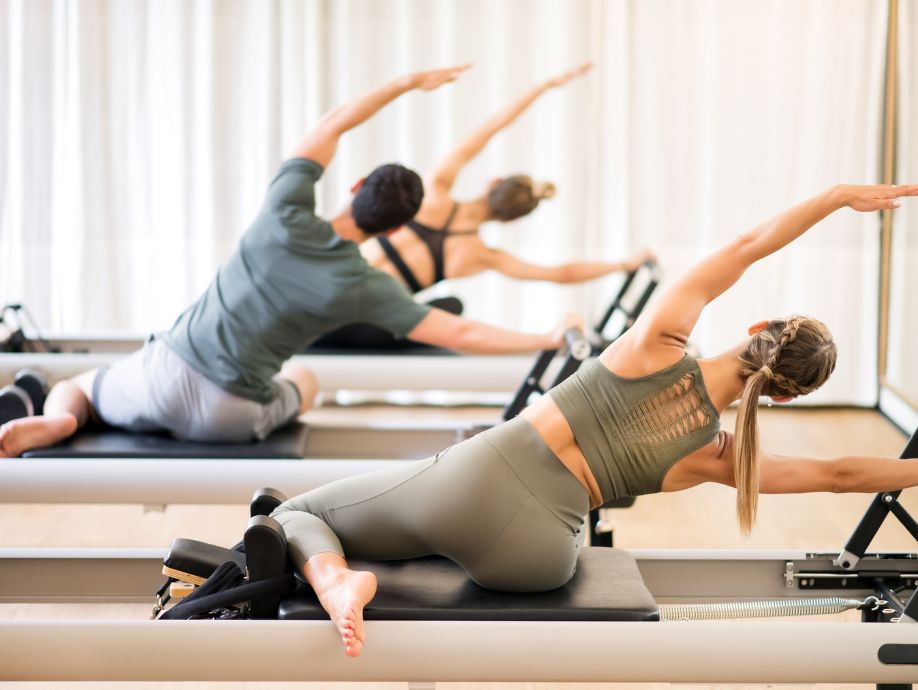
Pilates has been called many things; core magic, posture school, even “yoga with abs.” But beneath the memes is a method that’s surprisingly comprehensive: strength, mobility, breath, and focus rolled into one meticulous practice. If you’ve ever wondered why is Pilates good for you, or asked what does Pilates do beyond pretty planks, this deep dive covers the science-backed benefits of Pilates (including the key benefits of Pilates for women) and whether it truly nudges the needle on healthy aging.

We won’t only talk about the benefits but also break down why those benefits matter in real life and how they translate into feeling stronger, moving better, and aging with confidence. The goal isn’t just to list what Pilates can do, but to help your clients understand why the method is worth committing to, week after week.
Benefits of Pilates for Body and Mind

Pilates builds strong, balanced muscles; improves mobility and posture; sharpens body awareness; reduces pain and stress; and supports heart, bone, pelvic-floor, and brain health. Practiced consistently, it’s an elegant engine for longevity, think fewer “ouch” moments and more “I’ve got this” decades.

1. Core Strength that Actually Transfers to Life

At the heart of every Pilates practice is intentional core work targeting the deep abdominals, back muscles, diaphragm, and pelvic floor. Instead of chasing six-pack soreness, you train the stabilizers that protect the spine in everyday moves: picking up groceries, hoisting kids, or sitting through long meetings without morphing into a cashew. A stronger core means better balance, more efficient movement, and fewer compensations that lead to pain or injury.

Why it matters for aging:

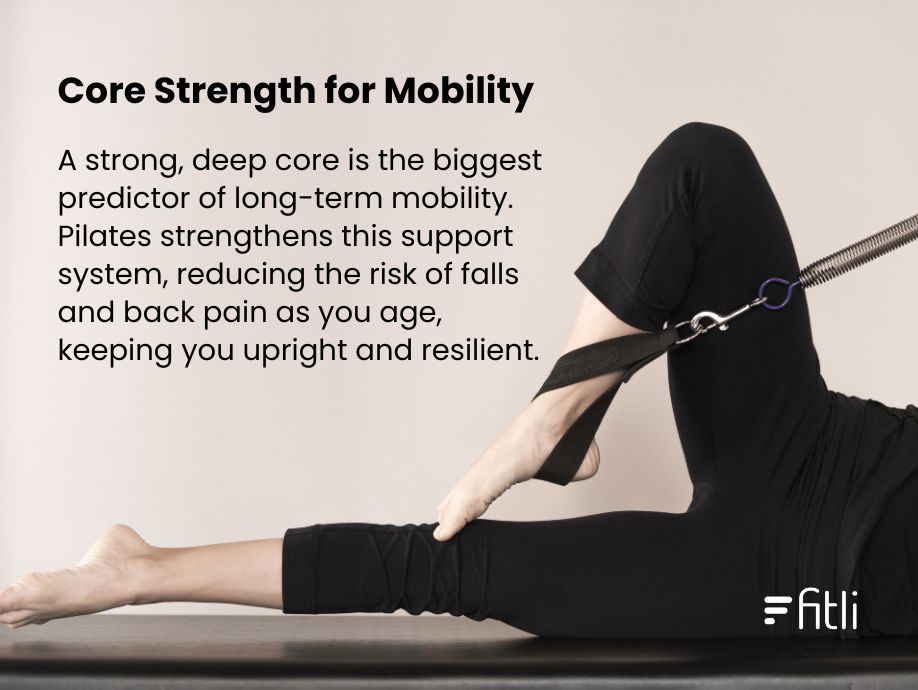
Core stability is one of the biggest predictors of long-term mobility. As we age, weak core muscles increase the risk of falls, back pain, and poor posture. Pilates strengthens the deep support system that keeps the body upright, balanced, and resilient.

2. Mobility and Functional Flexibility

One of the standout benefits of Pilates is its unique approach to mobility. Unlike passive stretching routines that encourage muscles to relax into length, Pilates teaches you to move through your full range of motion with control and strength. This means your muscles learn to elongate while staying active and supported, creating flexibility you can actually use in real life.

The result? Hips that rotate with ease, shoulders that glide smoothly instead of creaking, and a spine that can flex and extend without complaint. This type of functional mobility doesn’t just make you feel looser, it ensures that your body is both supple and strong enough to handle the demands of daily movement, from bending to tie your shoes to reaching for the top shelf.

Why it matters for aging:

Maintaining mobility is critical as we age. Research shows that preserved range of motion and muscle control are directly tied to better balance, gait efficiency, and reduced fall risk, two of the strongest predictors of independence and long-term health. Pilates provides a sustainable way to keep those joints moving well into later decades of life.

3. Posture and Alignment You Can Rely On

Modern life pulls the body out of alignment: rounded shoulders from laptops, tight hips from sitting, and uneven muscle use from repetitive habits. Pilates counters these patterns by strengthening underused muscles, lengthening tight areas, and teaching proper spinal stacking. Over time, practitioners develop an intuitive sense of how to stand, sit, and move with better alignment, reducing strain on the body and improving overall comfort.

Why it matters for aging:

Good posture helps protect spinal discs, keeps breathing efficient, and reduces chronic pain. Since posture tends to decline with age, training alignment early supports long-term spinal health and reduces degeneration-related discomfort.

4. Back Pain Relief and Long-Term Prevention

Many people first discover Pilates as a remedy for recurring back pain and stay because it consistently delivers results. By strengthening the multifidi, transverse abdominis, and other deep stabilizing muscles, Pilates helps create a strong support system for the spine. A 2023 meta-analysis supports Pilates as a valid therapeutic option for improving pain and function in chronic low back pain (MPDI).

At the same time, it mobilizes stiff joints, improves flexibility in the hips and shoulders, and retrains faulty movement patterns that often place excessive load on the lumbar region. This balanced approach doesn’t just provide short-term relief, it equips your body with tools for long-term resilience and fewer flare-ups.

Why it matters for aging:

Back pain becomes more common as the spine experiences wear, tear, and compression. Pilates helps offset these changes by keeping the supporting muscles strong and supple, reducing chronic pain and improving quality of life. A pain-free back also encourages consistent activity, which in turn supports cardiovascular fitness.

5. Mind–Body Focus and Stress Management

Among the most powerful benefits of Pilates is its emphasis on uniting breath, movement, and focus. Each Pilates exercise requires controlled breathing patterns, precise choreography, and intentional pacing, which together foster mindfulness and a sense of calm. Unlike passive relaxation techniques, Pilates keeps the body actively engaged while quieting the mind, making it a practical way to reduce stress and sharpen concentration.

This isn’t just theory: research shows that Pilates can reduce symptoms of anxiety and depression, with participants reporting improved quality of life and sleep after just eight weeks of regular practice (Complementary Therapies in Medicine, 2018). 

Why it matters for aging:

Chronic stress accelerates biological aging and contributes to inflammation, cognitive decline, and sleep issues. Pilates’ calming, breath-centered approach supports nervous system health and promotes emotional well-being over the long term. 

6. Balanced, Full-Body Strength

Rather than isolating muscles, Pilates engages multiple muscle groups at once, building balanced strength from head to toe. It strengthens the small stabilizers that support joints as well as the larger muscles that power daily movement. This prevents overdevelopment in one area and weakness in another, helping the body move as an integrated system.

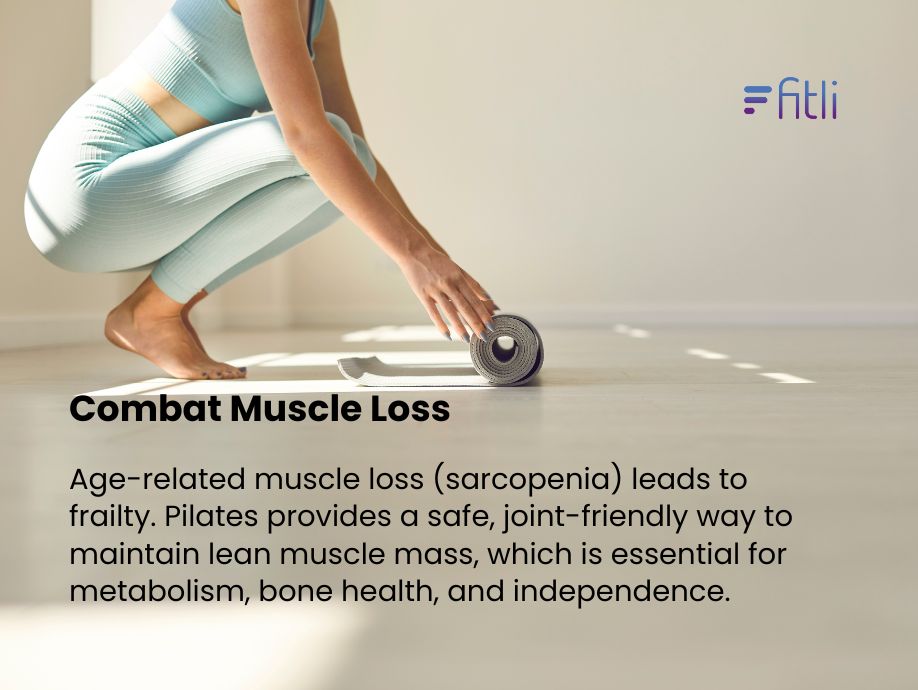
Age-related muscle loss (sarcopenia) affects up to 50% of adults over 80, contributing to frailty and increased fall risk (National Library of Medicine, 2022). Pilates provides a safe way to counter this decline by maintaining lean muscle without overloading sensitive joints.

Why it matters for aging:
Balanced strength protects joints, reduces injury risk, and improves overall functional fitness. Maintaining muscle mass is essential for aging well, supporting metabolism, bone health, and independence.

7. Joint-Friendly Conditioning

Unlike many traditional strength-training methods that overload the body in just one or two planes of motion, Pilates is intentionally three-dimensional. Pilates challenges balance through controlled transitions, unilateral movements, and core-led stability work, helping your body learn to stay steady under changing conditions. This combination of strength, coordination, and proprioception (your sense of body position) makes balance training both functional and accessible. 

Research shows that Pilates can significantly improve balance and reduce fall risk in older adults—one meta-analysis found meaningful improvements in dynamic balance after consistent practice (Journal of Bodywork & Movement Therapies).

Why it matters for aging:

Balance naturally declines with age due to changes in vision, muscle mass, and neuromuscular function. Since falls are one of the leading causes of injury in older adults, improving balance through Pilates becomes a powerful preventative tool.

8. Pelvic Floor Support 

Pilates’ blend of breathwork and deep core engagement naturally supports the pelvic floor without adding pressure or strain. Each movement encourages gentle coordination between the diaphragm, abdominals, back, and pelvic muscles, helping these often-overlooked muscles become stronger and more responsive. Because the work is subtle and low-impact, clients can build pelvic stability and confidence in a way that feels supportive rather than intimidating.

Why it matters for aging:

Pelvic floor changes are a normal part of life, especially during postpartum years and through menopause. Keeping these muscles active and well-coordinated helps maintain comfort, stability, and everyday confidence. With Pilates, clients build that support gradually and naturally making it a long-term investment in strength and well-being.

9. Hormonal Balance & Menopause Support 

One of the key benefits of Pilates for women is how well it supports the body through major hormonal transitions, particularly during perimenopause and menopause. As estrogen levels shift, many women experience changes in mood, bone density, muscle tone, and overall energy. Pilates provides a grounding, low-impact way to counter these effects through mindful movement, breathwork, and resistance-based strengthening. 

The controlled exercises help ease tension, improve circulation, and maintain lean muscle without overstressing the body. For many women, Pilates becomes a steady, supportive ritual during years when the body can feel unpredictable.

Why it matters for aging:

During menopause, bone and muscle loss accelerates. Pilates offers a sustainable way to slow these changes, helping women preserve muscle strength, support hormonal health, and maintain steadier energy and mood well into later decades.

10. Enhanced Athletic Performance

Pilates isn’t just for flexibility or recovery, it’s increasingly being used as a performance tool for athletes. By improving alignment, core control, and mobility, Pilates helps athletes move more efficiently and safely. This means better mechanics in every stride, jump, and twist. Importantly, Pilates strengthens both the big movers and the smaller stabiliser muscles that often get neglected in traditional athletic training reducing the risk of overuse injuries while enhancing power and precision. 

For instance, one study found that trained runners who did 12 weeks of focused Pilates core-training improved their 5-km run times and reduced the metabolic cost of running (PubMed). Another study showed that when Pilates was combined with plyometric training in basketball players, the group improved vertical jump more than the groups doing plyometrics or Pilates alone (PubMed).

Why it matters for aging:

Even recreational athletes experience age-related declines in muscle strength and joint mobility. Pilates helps maintain functional power and reduces injury rates, allowing people to stay active longer, whether that means running races, playing sports, or simply moving confidently.

In Summary

Pilates occupies a unique space in the fitness world because it combines many of the attributes tied to long-term health: low-impact strength building, maintained joint mobility, improved balance, and stress-reducing mindful movement. It doesn’t just sculpt muscles, it helps keep your body moving well, aligning posture, stabilising core and spine, and supporting mental clarity. 

When you practise it consistently, you’re not only training for today, you’re investing in how you’ll move, feel and age decades from now. Given how these key fitness components overlap with what research identifies as the hallmarks of healthy aging, Pilates becomes more than just a workout, it becomes a tool for longevity.

Whether your goal is to move better, age stronger, enhance athletic performance, or simply feel more at home in your body, Pilates offers a scalable, science-backed approach. Here’s how it helps:

  • Strengthens the core by targeting deep stabilizing muscles that protect the spine.
  • Improves mobility and functional flexibility, helping your body move with ease.
  • Enhances posture and alignment, counteracting the effects of sitting and tech use.
  • Reduces back pain and supports long-term spine health.
  • Boosts mind–body awareness and promotes stress relief through mindful movement.
  • Builds balanced, full-body strength without high-impact strain.
  • Improves balance and stability, reducing fall risk as you age.
  • Supports pelvic floor health, one of the key benefits of Pilates for women.
  • Enhances athletic performance with better mechanics and injury prevention.
  • Promotes longevity by maintaining muscle mass, mobility, posture, and mental clarity.
  • Supports hormonal balance during perimenopause and menopause (especially for women).
  • Strengthens bones and joints, helping prevent osteoporosis and age-related stiffness.